Crypto NFL Betting: The UK Punter’s Data-Driven Guide for the 2026 Season
 Available in US
Table of Contents
- The Numbers, Risks, and Regulatory Signals Every UK Crypto NFL Bettor Needs
- The Crypto Gambling Market in Numbers
- NFL Betting Handle: Why American Football Dominates
- NFL’s 15-Million UK Fanbase and the Betting Opportunity
- How Crypto NFL Betting Works: Deposit, Wager, Withdraw
- UK Regulatory Landscape: UKGC, FCA, and the Crypto Question
- NFL Betting Markets Available at Crypto Sportsbooks
- Risks: Volatility, Irreversibility, and Consumer Protection Gaps
- The UK’s £10 Billion Unlicensed Gambling Problem
- Live NFL Betting with Crypto: What the Data Shows
- Why Stablecoins Are Reshaping NFL Crypto Wagers
- What Comes Next: FCA Regime and the 2027 Horizon
- Frequently Asked Questions About Crypto NFL Betting

Nine years in this space, and I have never seen a collision quite like this one. On one side, a global crypto gambling market projected to exceed $65 billion. On the other, an NFL season that pulled in $30 billion in legal wagers across the United States alone. And sitting in the middle — a UK audience of 15 million NFL fans, 8% of whom already hold cryptocurrency, with no licensed domestic operator connecting those two interests.
That gap is not a quirk. It is the defining tension of crypto NFL betting in the United Kingdom right now, and it shapes every decision a UK punter faces — from which blockchain network to use for a deposit to whether the platform holding your funds has any legal obligation to return them. I have spent the past year tracking regulatory statements, market data, and payment infrastructure shifts to put together a resource that does not exist in the current top ten search results: an analysis built on numbers, not affiliate commissions. Every claim below is backed by a specific statistic or a direct quote from a regulator, analyst, or legal expert.
Crypto Gambling Market
Projected to surpass $65 billion globally, with crypto now accounting for roughly 17% of all iGaming volume.
NFL Betting Handle
$30 billion wagered legally on the NFL in 2025 — an 8.5% year-on-year increase, with the Super Bowl alone projected at $1.76 billion for 2026.
UK Crypto Ownership
8% of UK adults hold digital assets, with 15% of 18-to-34-year-olds owning crypto — the same demographic most active in online sports betting.
UK Unlicensed Market
1.5 million people in the UK wager approximately £10 billion annually on unlicensed platforms, with “crypto” ranking as one of the top two search terms driving traffic to those sites.
The Numbers, Risks, and Regulatory Signals Every UK Crypto NFL Bettor Needs
- The global crypto gambling market is heading past $65 billion, with NFL wagering alone generating $30 billion in legal handle during the 2025 season — and stablecoins are projected to carry over 70% of crypto betting transactions by the end of 2026.
- No crypto sportsbook holds a UKGC licence. UK bettors using offshore platforms forfeit GamStop self-exclusion, fund segregation, and dispute resolution protections.
- The UK Gambling Commission is actively exploring a regulated crypto pathway through its Industry Forum, with the FCA’s cryptoasset regime expected by October 2027 providing the regulatory framework needed to move forward.
- The UK’s unlicensed gambling market has ballooned to £10 billion annually, with “crypto” identified by the UKGC as one of the top two search terms directing UK consumers to those unregulated sites.
- Volatility, irreversibility, and the absence of consumer protections are the three risks that separate crypto NFL betting from traditional wagering — and stablecoin adoption is the market’s primary response to the first of those three.
The Crypto Gambling Market in Numbers
The first time I tried to quantify the crypto gambling sector — back in 2019 — the best figure I could find was a rough estimate scribbled in a Telegram group. Today, the data infrastructure has matured enough to paint a clear picture, and that picture is enormous.
The global crypto gambling market is projected to surpass $65 billion in 2026, growing at a compound annual rate somewhere between 12% and 15%. To put that in perspective, crypto-native platforms now account for roughly 17% of all iGaming wagers placed worldwide. That is not a fringe anymore. That is a structural segment of the industry.
Crypto casino wagers hit $26 billion in the first quarter of 2025 alone — nearly doubling the figure from the same period a year earlier. The growth is not gradual; it is exponential.
Bitcoin still dominates transaction volume, commanding about 66% of all crypto gambling activity, with Ethereum trailing at 9% and Litecoin at 6%. But those headline numbers mask a significant shift happening underneath: stablecoins. I will dig into that trend in a later section, but the short version is that roughly 40% of online betting platforms now accept cryptocurrency deposits, up from a fraction of that just three years ago.
The raw growth rate reinforces the trajectory. The total number of crypto wagers has climbed 83.6% compared to mid-2022 levels. An estimated half of all Bitcoin transactions are now linked to gambling activity — a statistic that surprises people outside the industry but makes perfect sense when you consider the speed, pseudonymity, and borderless nature of blockchain payments.
These market figures represent global activity across all gambling verticals — casino, poker, sports betting, and esports. NFL-specific crypto volume is a subset, but the infrastructure driving that global growth is the same infrastructure UK punters interact with when placing a wager on a Sunday night game.
What strikes me most after tracking these numbers across multiple cycles is the resilience. Crypto gambling volume grew through the 2022 bear market, accelerated during the 2023 recovery, and maintained momentum into 2026 despite increased regulatory scrutiny. The demand is structural, not speculative — people are gambling with crypto because the payment rails are faster, cheaper, and more accessible than traditional alternatives in markets where those alternatives are restricted or slow.
NFL Betting Handle: Why American Football Dominates
Here is a number that stopped me cold when I first pulled it from the American Gaming Association data: a single NFL Sunday afternoon slate regularly generates more betting handle than an entire week of Major League Baseball or NBA action. Not a playoff week. A regular Sunday. That kind of concentration of wagering activity in one sport, on one day, is unmatched anywhere in the global sports calendar.

The full-season picture is just as striking. Legal NFL wagers in the United States reached an estimated $30 billion during the 2025 season, an 8.5% jump from $27.5 billion the year before. And the total legal sports betting handle in the US has now crossed $165 billion cumulatively, with more than $600 billion wagered since the post-PASPA era began in 2018. The NFL commands the largest single share of that volume.
Super Bowl LX in 2026 is projected to attract $1.76 billion in wagers — a record that would eclipse the $168.7 million bet in New Jersey alone during Super Bowl LIX. As the AGA’s Bill Miller put it, no single event brings fans together like the Super Bowl, and that record figure captures just how embedded wagering has become in the viewing experience.
The broader market for American football betting — including college and international — grew from $8.52 billion in 2025 to $9.5 billion in 2026, a compound annual growth rate of 11.5%, with projections reaching $14.49 billion by the end of the decade. Mobile accessibility, expanding state-level legalisation, and a rapidly growing international fanbase are the primary drivers.
For UK punters, these numbers matter practically: the size of the NFL handle determines the depth and liquidity of the markets you can access. Deep markets mean tighter spreads, more prop options, and faster line movement. When I compare the NFL market depth at crypto sportsbooks to what was available even two seasons ago, the improvement is substantial.
Those $30 billion in NFL wagers are overwhelmingly American — but the sport’s fastest-growing international audience sits right here in the UK.
NFL’s 15-Million UK Fanbase and the Betting Opportunity
I was at Wembley for one of the early International Series games — the kind where half the crowd was still figuring out what a first down was. That was years ago. The NFL in the UK now looks nothing like those tentative early fixtures.
The NFL’s UK fanbase has reached 15 million people. The league has staged more than 40 regular-season games in London since 2007, with average attendance consistently exceeding 87,000 — a figure that puts most Premier League stadiums to shame on raw capacity alone.

The record crowd stands at 86,651 for the Jaguars-Patriots game at Wembley in 2024, and the NFL’s own UK operation has stated that London games are a continued catalyst for year-round fan engagement, with the league focused on serving those 15 million fans and expanding flag football participation to over 100,000 young players. That is not a niche audience anymore. It is a mainstream one.
Search data confirms the depth of interest. Approximately 1.2 million people in the UK search for NFL-related content every month, and the UK accounts for roughly 3% of global NFL fan traffic by search volume. Those are significant numbers for a sport that is not native to the country, and they point to a fanbase that is actively engaged — following teams, tracking stats, watching live broadcasts on Sky Sports, and increasingly wanting to bet on the outcomes.
The betting angle is where this gets interesting for the crypto discussion. UK sports bettors are already among the most active in Europe — 10% of the population participates in online sports betting, and 47% engage in some form of gambling. Football dominates the wagering landscape with £1.1 billion in gross gambling yield. But the NFL is carving out a growing share, particularly among the 18-to-34 demographic — the same age group where 15% own cryptocurrency. The overlap between NFL fandom, online betting activity, and crypto ownership in the UK is not theoretical. It is a measurable, expanding market segment with no regulated domestic outlet.
How Crypto NFL Betting Works: Deposit, Wager, Withdraw
The first time I walked someone through a crypto sportsbook deposit — a mate who had been betting with high-street bookmakers for a decade — his reaction was a mix of fascination and mild panic. “Where is the sort code?” he asked, staring at a QR code. That moment captures the core difference: crypto NFL betting replaces the traditional banking pipeline with blockchain-based transfers, and the mechanics are different enough to warrant a clear walkthrough.
Handle — the total amount of money wagered on a given event or over a given period. When I say the NFL’s handle was $30 billion in 2025, that is the sum of every dollar staked, not the profit or loss.
Moneyline — a bet on which team will win a game outright, with no point spread involved. In UK terms, this is the closest equivalent to a straight “match result” wager.
From Wallet to Wager to Withdrawal: A Bitcoin NFL Bet
Step 1: Acquire BTC. You purchase Bitcoin through a UK-registered exchange or already hold it in a personal wallet. The typical UK bettor holds around £1,842 in crypto assets.
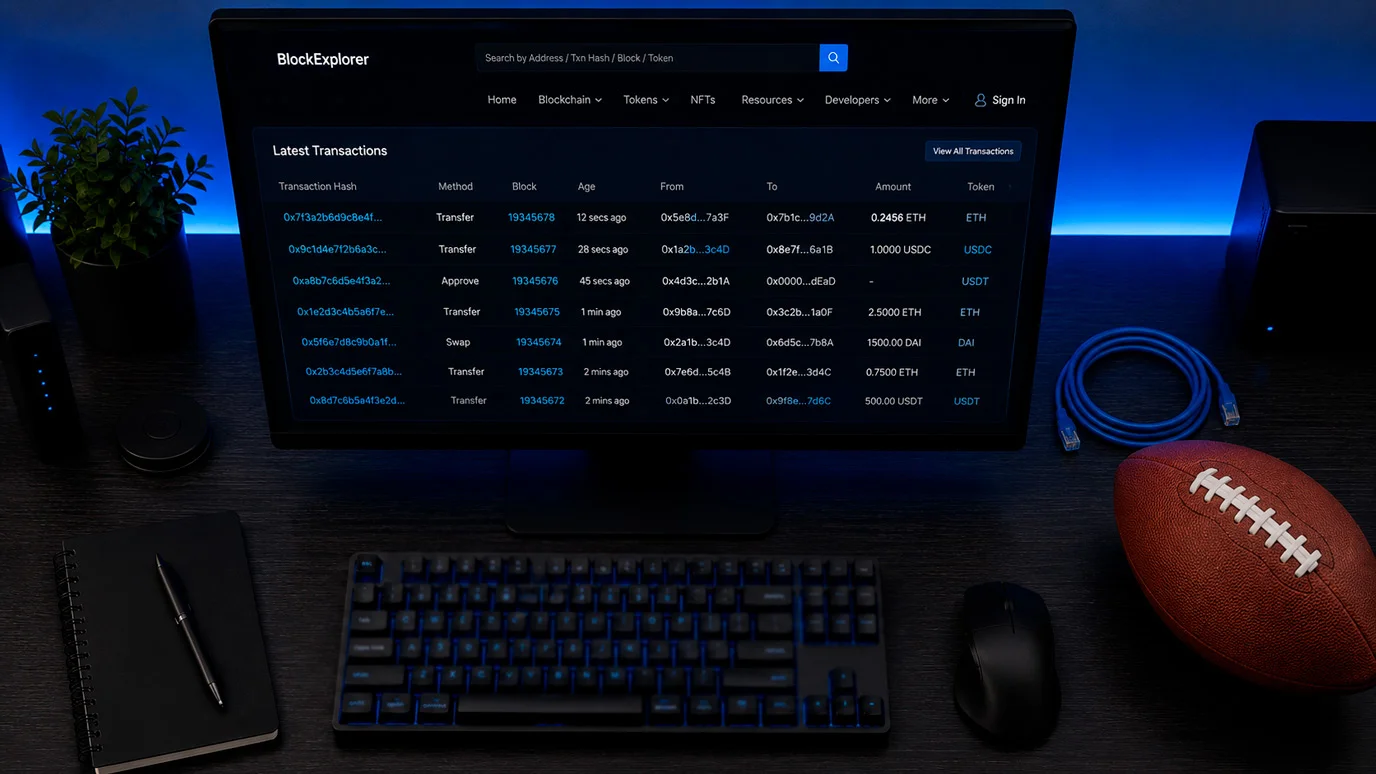
Step 2: Deposit to sportsbook. You navigate to the sportsbook’s deposit page, select Bitcoin, and receive a unique wallet address or QR code. You send BTC from your personal wallet to that address. On-chain Bitcoin deposits typically require 1-3 network confirmations, which can take anywhere from 10 minutes to an hour depending on network congestion.
Step 3: Place the wager. Once the deposit is credited, your sportsbook balance shows the equivalent value in BTC (or converted to a fiat display value). You select an NFL market — say, a Week 6 moneyline — confirm your stake, and the bet is placed.
Step 4: Settlement. After the game concludes, winning bets are settled and credited to your sportsbook balance, typically within minutes of the final whistle.
Step 5: Withdraw. You request a withdrawal to your personal wallet address. Processing times vary by platform and network, but crypto withdrawals are generally measured in minutes to hours rather than the days typical of bank transfers.
Mobile access is a critical piece of this workflow. Roughly 80% of all online wagers are now placed from mobile devices, and the same ratio holds for crypto gambling. That means the deposit-to-bet pipeline needs to work smoothly on a phone screen, with wallet apps, sportsbook interfaces, and QR code scanners all functioning in sequence. The platforms that get this right see significantly higher retention; the ones that force desktop-only wallet connections lose users at the deposit step.
For a deeper breakdown of Bitcoin-specific deposit and withdrawal mechanics, including network comparisons and fee structures, I have written a dedicated guide to Bitcoin NFL betting deposits and withdrawals that covers the technical detail this overview cannot.
Cryptocurrencies Used for NFL Betting
Not all crypto is created equal when it comes to sportsbook transactions, and the distribution of usage tells you a lot about what bettors actually prioritise.
Bitcoin remains the dominant currency in crypto gambling, accounting for approximately 66% of all transaction volume. Its first-mover advantage, brand recognition, and universal acceptance across platforms make it the default choice for most users. Ethereum sits at around 9%, favoured by bettors already active in the DeFi and NFT ecosystems who hold ETH as a primary asset. Litecoin captures roughly 6%, valued for its faster block times and lower transaction fees compared to on-chain Bitcoin.
| Characteristic | Bitcoin (BTC) | Ethereum (ETH) | Tether (USDT) | Litecoin (LTC) |
|---|---|---|---|---|
| Share of crypto gambling volume | ~66% | ~9% | Growing rapidly | ~6% |
| Typical deposit confirmation | 10-60 minutes | 2-5 minutes | Varies by network | 2-5 minutes |
| Price volatility exposure | High | High | Minimal (dollar-pegged) | High |
| Primary advantage | Universal acceptance | Smart contract ecosystem | Price stability | Speed and low fees |
The biggest shift I have observed over the past two years, though, is the rise of stablecoins. Industry projections indicate that USDT and USDC could account for more than 70% of all crypto betting transactions by the end of 2026. That is a dramatic rebalancing. Bettors are increasingly choosing dollar-pegged assets to eliminate the volatility variable — a rational response when your wager’s value can swing 5% before the game even kicks off. The stablecoin trend is significant enough that I have dedicated a separate section to it later in this guide.
The choice of cryptocurrency affects three things simultaneously: your deposit speed, your exposure to price swings between placing a bet and withdrawing winnings, and the network fees you pay on each transaction. There is no single “best” option — the right choice depends on whether you prioritise speed, stability, or minimising costs.
UK Regulatory Landscape: UKGC, FCA, and the Crypto Question
If I could summarise the UK’s regulatory position on crypto betting in a single image, it would be a door that is simultaneously locked and being measured for a new frame. The UK Gambling Commission does not licence any crypto sportsbook. Not one. And yet, the Commission’s own leadership is publicly exploring what a regulated pathway might look like.
Tim Miller, the UKGC’s Executive Director, said it plainly at the Betting and Gaming Council’s annual meeting in February 2026: “Our illegal market research shows that crypto is one of the two biggest search terms directing British consumers to unlicensed sites. We cannot ignore that reality.”
That statement marks a significant shift in tone. For years, the Commission treated cryptocurrency as a risk to be managed through exclusion. The logic was straightforward: crypto payments create challenges around source-of-funds verification, anti-money-laundering controls, and the affordability checks that the Gambling Act requires licensed operators to perform. But exclusion has not eliminated demand — it has displaced it offshore, into the unlicensed market that now represents a £10 billion problem.
Miller followed that admission with a statement that deserves careful reading. He said the Commission was approaching the question “in the spirit of exploring the art of the possible rather than starting from a position of finding all the reasons not to innovate.” For anyone who has watched the UKGC operate over the past decade, that language is remarkable. The Industry Forum, a consultative body within the Commission, is now actively examining how crypto payments could be integrated into the licensed framework.
The timeline is anchored to the FCA’s incoming cryptoasset regulatory regime, expected by 25 October 2027. The Financial Services and Markets Act 2000 (Cryptoassets) Regulations 2025 established the legislative framework, and the FCA is building the detailed rules that will bring cryptoassets within its regulatory perimeter. Until that regime is operational, the Gambling Commission faces a practical constraint: it cannot require licensed operators to apply financial controls to a payment method that does not yet have a settled regulatory framework from the financial conduct regulator.
Andrew Rhodes, the Gambling Commission’s CEO, has been more cautious in his public statements. He described the crypto question as “a government-level discussion” and “a government-level decision,” noting that once you open that door, you cannot close it. His specific concern centres on whether crypto should be treated as a legitimate source of wealth and source of funds under existing gambling regulations — questions that have no settled answer under current UK law. Rhodes also noted that the growth in cryptocurrency ownership amongst younger demographics “means that there is a pressure building within the system.”
FCA Timeline: The new cryptoasset regulatory regime is expected to be operational by 25 October 2027. Between now and then, the Gambling Commission and FCA will need to coordinate on how crypto payment rules interact with gambling licence conditions. A quarter of UK crypto owners have said they would be more inclined to invest in digital assets under stricter regulation — a signal that regulatory clarity could expand the market rather than constrain it.

For a thorough examination of the Commission’s evolving stance and the Industry Forum’s work, I have written a dedicated analysis of the UK Gambling Commission’s crypto betting policy that tracks every public statement and consultation document.
NFL Betting Markets Available at Crypto Sportsbooks
A colleague once told me that the depth of an NFL betting menu is the quickest proxy for a sportsbook’s seriousness. I have found that to be broadly true — and at the better crypto platforms, the market depth now rivals what you would find at established UK-licensed operators for Premier League football.
Point spread — a handicap applied to the favourite to level the betting field. If the Kansas City Chiefs are listed at -6.5, they must win by 7 or more points for a spread bet on them to pay out.
Totals (over/under) — a wager on whether the combined score of both teams will finish above or below a number set by the sportsbook.
Props — proposition bets on specific events within a game that may not directly relate to the final outcome: a quarterback’s passing yards, first touchdown scorer, or total sacks in a half.
Futures — long-term wagers placed before or during a season on outcomes like the Super Bowl winner, conference champions, or MVP award.
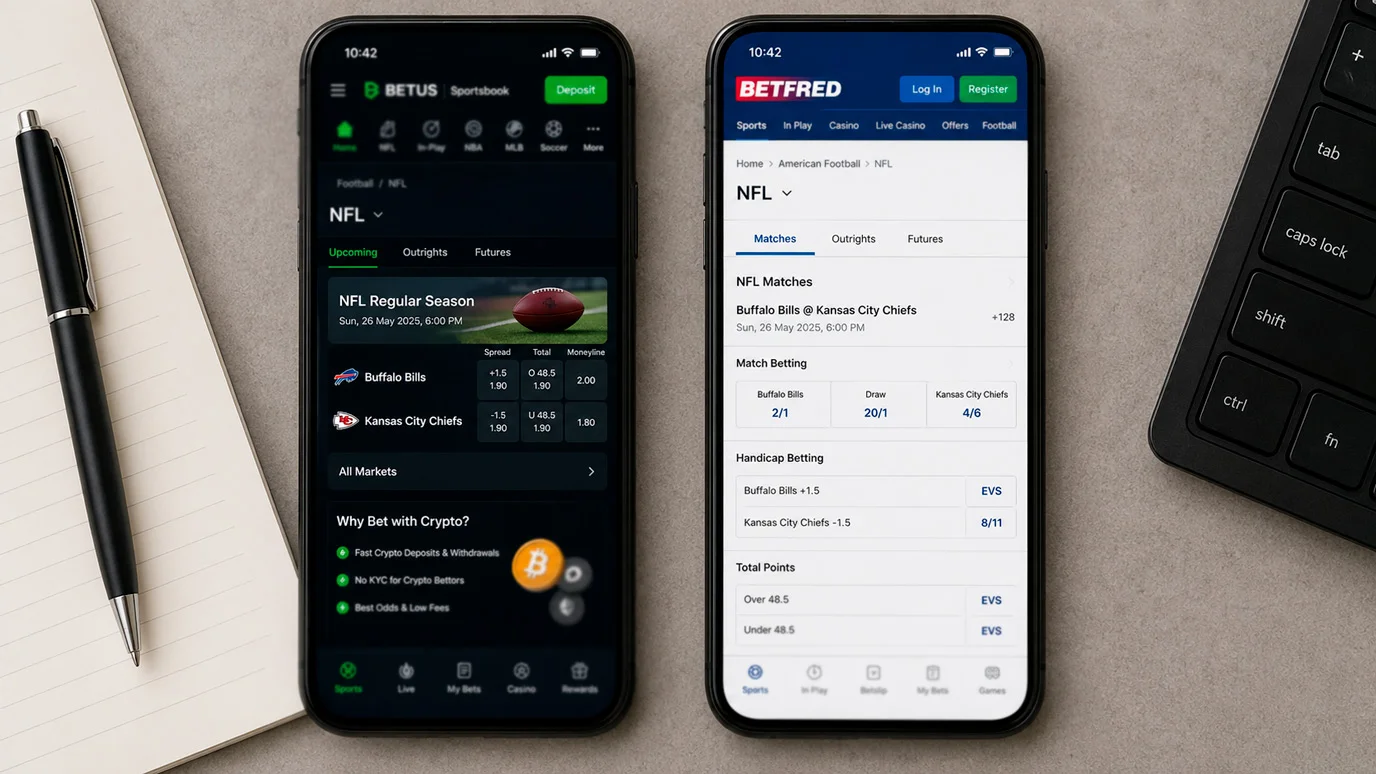
The standard NFL menu at a crypto sportsbook covers moneylines, point spreads, totals, player props, game props, futures, and parlays (known as accumulators in UK betting parlance). Live in-play markets add another layer: quarter lines, drive-specific props, and next-score markets that update in real time as the game progresses. Live betting now represents 53.4% of all wagering activity globally, and that share is growing at a compound rate of nearly 15% annually — a trend I explore further in the live NFL betting with crypto section.
Odds example — moneyline in UK fractional format:
Suppose the Buffalo Bills are listed at 4/6 (favourites) and the Miami Dolphins at 6/4 (underdogs). A £100 stake on the Bills at 4/6 returns £166.67 total (£66.67 profit). A £100 stake on the Dolphins at 6/4 returns £250 total (£150 profit). Crypto sportsbooks typically let you toggle between fractional, decimal, and American formats — but if you are betting from the UK, fractional is the native language.
Where crypto sportsbooks tend to differentiate is in prop market depth and betting limits. Some platforms offer significantly higher maximum stakes on NFL props than traditional bookmakers, particularly for high-profile games and the Super Bowl. The trade-off is that line movement can be sharper at smaller-liquidity platforms, so timing matters more when you are placing a wager on a player prop at a crypto-native sportsbook compared to a high-volume licensed operator. For a full breakdown of each bet type, including worked payout examples, the NFL bet types at crypto sportsbooks guide covers every category in detail.
Risks: Volatility, Irreversibility, and Consumer Protection Gaps
I lost money on a winning bet once. Not because the sportsbook cheated me — the bet settled correctly — but because Bitcoin dropped 11% between the time I deposited and the time I withdrew my winnings. The payout in BTC was exactly what it should have been. The payout in pounds was less than my original stake. That experience taught me more about crypto betting risk than any white paper ever could.
Andrew Rhodes, CEO of the UK Gambling Commission, described the regulatory stakes bluntly: “This is going to have to be government-level discussion, and it is a government-level decision because once you open that door, you cannot close it. It brings questions around are you considering crypto as a source of wealth? Are you considering that as a source of funds?”

Price volatility is the most visible risk, but it is not the only one. Blockchain transactions are irreversible by design. If you send Bitcoin to the wrong wallet address, there is no bank to call, no chargeback to initiate, and no regulator with the authority to compel a return of funds. Chris Elliot, a partner at London-based law firm Wiggin, has noted that crypto can actually support a more robust control environment than fiat payments in some respects, particularly where cash is involved — but the irreversibility of transactions is a fundamental shift in who bears the risk of error. With a debit card, the bank absorbs the fraud risk. With crypto, you do.
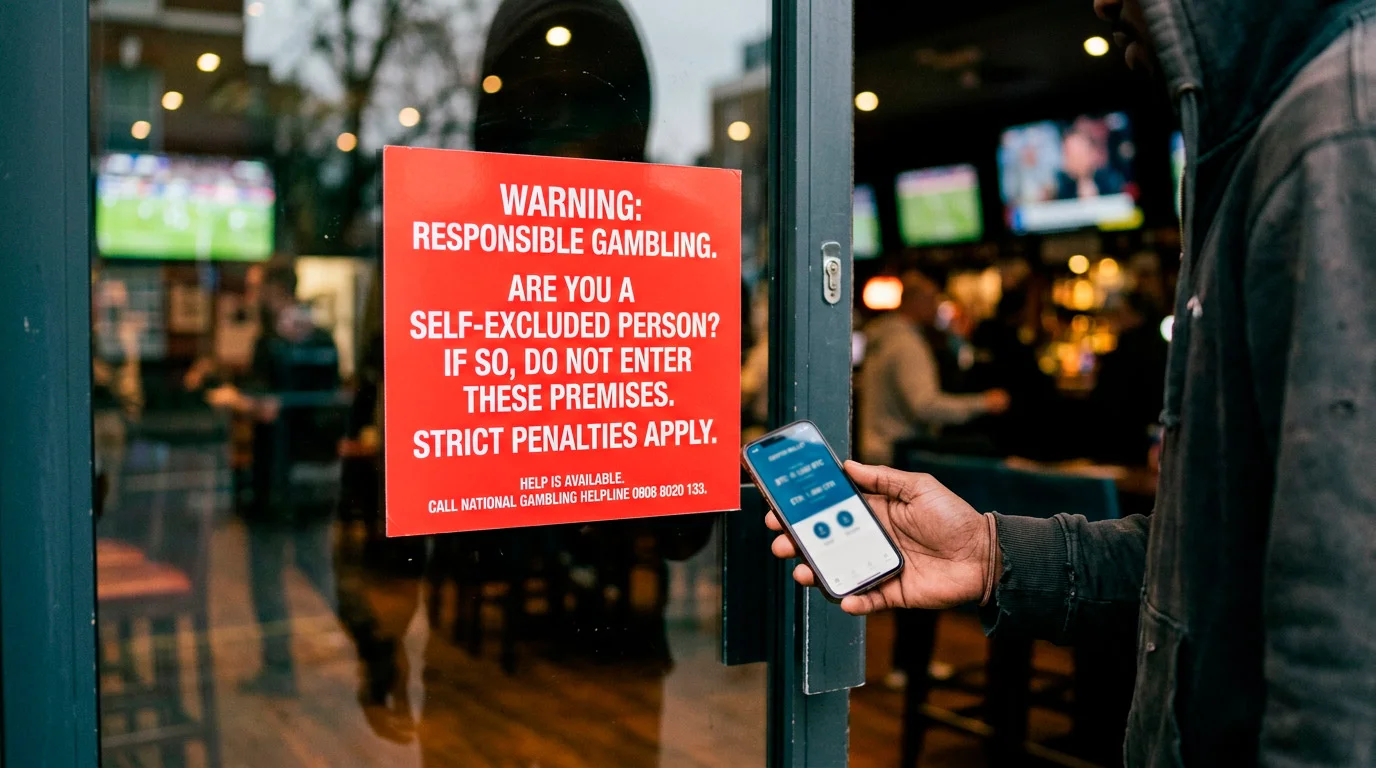
The consumer protection gap is structural. Offshore crypto sportsbooks operate outside the UKGC licensing framework — no GamStop participation, no affordability checks, no access to the Independent Betting Adjudication Service, no requirement to segregate customer funds. Every pound wagered on an unlicensed platform sits beyond the reach of the regulatory safety net that UK gambling law was designed to provide.
Pre-Bet Risk Checklist for UK Crypto NFL Bettors
- Have you checked whether the platform holds any gambling licence, and in which jurisdiction?
- Are you betting with a volatile cryptocurrency or a stablecoin — and do you understand the price risk of your choice?
- Have you verified the deposit wallet address character by character before sending funds?
- Do you know the platform’s withdrawal limits, processing times, and any minimum thresholds?
- Have you set a loss limit in fiat terms, not just in crypto units?
- Are you aware that GamStop self-exclusion does not apply to offshore crypto platforms?
- Do you have a plan for converting winnings back to GBP, including awareness of potential capital gains tax triggers?
I cover each of these risk categories in depth — including scam identification, problem gambling safeguards, and practical mitigation strategies — in the dedicated crypto NFL betting risks analysis. This section is the overview; that article is where you go if you want the full picture before risking a single satoshi.
GRIDHASH Crypto Bet Toolkit
Odds conversion, price-volatility exposure on winnings, and bankroll sizing — the maths behind betting NFL games with crypto.
A winning bet paid in a volatile coin can still lose you money in GBP terms if the price moves against you before you withdraw. See the gap between a stablecoin payout and a volatile-coin payout on the same bet.
The average UK crypto holder carries about £1,842 in digital assets. See where your betting bankroll sits against that benchmark and what a disciplined unit size looks like.
The UK’s £10 Billion Unlicensed Gambling Problem
Every serious conversation about crypto betting in the UK eventually lands on the same uncomfortable number: £10 billion. That is the estimated annual turnover on unlicensed gambling sites used by UK residents — roughly 1.5 million people placing bets on platforms that hold no UKGC licence and sit entirely outside the regulatory framework.
The unlicensed gambling sector’s share of UK turnover has grown from 0.5% to between 10% and 12% in just five years. Unlicensed operators extracted an estimated £379 million in the first half of 2025 alone — a 345% increase in illegal gambling revenue over a relatively short period.
Crypto is not the sole driver of that growth, but it is a primary enabler. The Gambling Commission’s own research identifies “crypto” as one of the two most common search terms that lead British consumers to unlicensed sites. The payment mechanism and the unlicensed market are functionally intertwined — crypto makes it easy to deposit on platforms that UK-licensed operators cannot offer, and the absence of those UK-licensed crypto options pushes demand toward the unlicensed supply.
Tim Miller framed the regulatory logic at the BGC’s annual meeting: “Demand exists and will probably grow. Innovation should be and can be one of our central consumer protection tools when it comes to the illegal market.” The implication is clear — prohibition has not reduced demand. It has simply moved it somewhere the UKGC cannot reach.
The government’s response so far is enforcement-focused. A new Illegal Gambling Taskforce, backed by £26 million in funding, has been established to target offshore operators serving UK customers. The initiative was announced by Gambling Minister Baroness Fiona Twycross at the BGC’s annual gathering, and it represents the most significant investment in anti-illegal-gambling enforcement the UK has made. Whether that enforcement approach can meaningfully dent a £10 billion market that operates across jurisdictions and uses pseudonymous payment methods is a question the data has not yet answered.
What I find most telling is the regulatory tone. Five years ago, the unlicensed market was treated as a marginal concern — too small to warrant significant attention. The shift to £26 million in dedicated funding and public acknowledgement from the Commission’s Executive Director that crypto demand cannot be ignored suggests the policy conversation has fundamentally changed. The question is no longer whether UK regulators will address crypto gambling, but how quickly and on what terms.
Live NFL Betting with Crypto: What the Data Shows
The 6:25pm GMT kick-off on a Sunday is my favourite window of the NFL week. Three or four games running simultaneously, markets shifting with every possession, and the ability to react to what I am actually watching rather than what I predicted twelve hours earlier. Live in-play betting has become the dominant mode of sports wagering globally, and the intersection with crypto creates both opportunities and technical friction worth understanding.
Live betting now accounts for 53.4% of all wagering activity worldwide, growing at a compound annual rate of 14.85% — a trend projected to continue through at least 2031. More bets are placed during games than before them.

The appeal is obvious. Live markets let you bet on quarter outcomes, next scoring plays, drive results, and adjusted spreads that reflect what is happening on the field in real time. For NFL specifically, the stop-start nature of the game — with breaks between plays, commercial timeouts, and quarter intervals — creates natural windows for in-play wagering that continuous-flow sports like football or basketball do not offer as cleanly.
Where crypto introduces a wrinkle is in the relationship between blockchain confirmation times and odds movement. On-chain Bitcoin transactions take minutes to confirm. Live NFL odds can shift in seconds. This mismatch means that for live betting, your crypto deposit needs to already be sitting in your sportsbook account before kick-off. You are not depositing in real time to place a live wager — the blockchain is too slow for that. You deposit in advance, and the sportsbook credits your balance in its internal system, which operates at the speed needed for live markets.
Mobile access is central to this. The overwhelming majority of crypto betting activity occurs on phones, and that percentage skews even higher for live wagering specifically. The experience of watching a game on one screen while placing a live prop bet on your phone is now standard for a significant segment of NFL bettors. Crypto sportsbooks that optimise for mobile — fast-loading interfaces, one-tap bet placement, clear live market navigation — have a measurable edge in retaining live bettors.
UK timing adds a specific dimension. NFL Sunday games kick off at 6:00pm and 9:05pm GMT, with the marquee Sunday night game starting at 1:20am Monday morning. Thursday Night Football lands at 1:15am GMT on Fridays, and Monday Night Football starts at 1:15am GMT on Tuesdays. These late-night windows mean UK live bettors are a self-selecting, dedicated audience — you are not casually stumbling into a live NFL bet at 2am.
If blockchain speed matters for live betting, it matters even more for the currency you choose — and that brings us to the stablecoin question.
Why Stablecoins Are Reshaping NFL Crypto Wagers
I started paying serious attention to stablecoin adoption in crypto betting around late 2023, when I noticed that my own deposit habits had shifted. I was no longer sending Bitcoin to sportsbooks for NFL wagers. I was sending USDT. The reason was simple: I wanted my bet to be a bet on the game, not a bet on the game plus a bet on the price of Bitcoin. And millions of other bettors were making the same calculation.
The numbers confirm the shift. Stablecoins — primarily USDT and USDC — are projected to account for more than 70% of all crypto betting transactions by the end of 2026. That is a complete inversion of the market structure from just a few years ago, when Bitcoin dominated not because it was the best tool for the job but because it was the only tool most platforms accepted.
| Characteristic | USDT (Tether) | USDC (Circle) | Volatile Crypto (BTC/ETH) |
|---|---|---|---|
| Dollar-peg stability | Maintained, minor de-peg events historically | Strong, US-regulated issuer | No peg — value fluctuates freely |
| Price risk during active bets | Minimal | Minimal | Significant — can erode or inflate winnings |
| Common networks for deposits | TRC-20, ERC-20, Solana | ERC-20, Solana, Base | Native chains, Lightning (BTC) |
| Sportsbook acceptance | Widest stablecoin support | Growing, but less universal | Near-universal |
The practical advantage is clean accounting. When you bet with USDT, your stake, your potential payout, and your withdrawal are all denominated in a dollar-equivalent value. You can calculate your profit or loss without needing a price chart open in another tab. For season-long NFL betting — where you might have active futures bets, weekly spreads, and the occasional live wager all running simultaneously — that clarity is not a luxury. It is a basic requirement for sound bankroll management.
The risk that stablecoin advocates sometimes gloss over is de-pegging. USDT has experienced brief deviations from its dollar peg historically, and USDC saw a more notable event in March 2023 when concerns about reserve holdings at Silicon Valley Bank temporarily pushed the price below $0.90. For a bettor with a large balance sitting on a sportsbook in USDC during such an event, the “stable” part of stablecoin becomes suddenly less reassuring.
Despite that caveat, the trajectory is clear. Stablecoins solve the volatility problem that has deterred many potential crypto bettors, and their adoption curve in the sports betting vertical mirrors what happened in the broader DeFi ecosystem two years earlier. Bitcoin opened the door to crypto betting. Stablecoins are making it practical.
What Comes Next: FCA Regime and the 2027 Horizon
I keep a timeline pinned above my desk with one date circled in red: 25 October 2027. That is the target for the FCA’s new cryptoasset regulatory regime to become operational, and it is the single most important date on the calendar for anyone tracking the intersection of crypto and gambling in the UK.
Regulatory timeline: The Financial Services and Markets Act 2000 (Cryptoassets) Regulations 2025 established the legislative framework. The FCA is now building the detailed rules. Once operative by October 2027, UK-licensed gambling operators will for the first time have a settled financial regulatory framework within which crypto payments could potentially be integrated into their offerings.
The significance of that date extends beyond the FCA’s immediate remit. The Gambling Commission has effectively signalled that its ability to consider crypto payment integration depends on the FCA regime being in place. You cannot require a licensed bookmaker to perform source-of-funds checks on a payment method that has no regulatory definition. Once the FCA establishes that definition, the Commission gains the infrastructure it needs to potentially open the door.
Chris Elliot, a partner at the London-based law firm Wiggin, has argued that “a credible, regulated pathway would be a more effective consumer protection tool than de-facto prohibition if it reduces displacement offshore, which invariably it would.” That logic maps directly onto the black market data covered earlier in this guide. If 1.5 million UK users are already betting with crypto on unlicensed platforms, a regulated domestic alternative does not create new demand — it redirects existing demand into a safer channel.
A quarter of UK crypto owners have indicated they would be more willing to engage with digital assets under stricter regulation. That finding, from the FCA’s own consumer research, suggests the regulated pathway could actually expand the addressable market rather than constrain it. Bettors who currently avoid crypto because of the perceived Wild West risk profile might enter the market once a UKGC-licensed operator offers it within a regulated framework.
The window between now and October 2027 is a transitional period. The UKGC is exploring, the FCA is building, and UK bettors who use crypto for NFL wagering are operating in a space that is neither licensed nor explicitly prohibited. That ambiguity will resolve — the only open questions are the exact terms and the pace. Every indication from the Commission’s leadership suggests the resolution will involve some form of regulated crypto integration, not a permanent ban.
Frequently Asked Questions About Crypto NFL Betting
Is crypto NFL betting legal in the UK?
There is no UK law that explicitly prohibits an individual from using cryptocurrency to place a bet on an NFL game. However, no crypto sportsbook holds a UKGC licence, which means any platform accepting crypto deposits for NFL wagers operates outside the UK’s regulated gambling framework. UK residents who use these platforms do so without the consumer protections — dispute resolution, fund segregation, self-exclusion through GamStop — that UKGC-licensed operators are required to provide. The legal grey area sits between the bettor’s freedom to spend their own assets and the regulatory framework’s inability to supervise the transaction.
How do I deposit Bitcoin at a crypto sportsbook for NFL betting?
The process involves sending Bitcoin from your personal wallet to a unique deposit address provided by the sportsbook. You navigate to the platform’s deposit section, select Bitcoin, and either copy the wallet address or scan a QR code. You then initiate a transfer from your wallet app or exchange account. On-chain Bitcoin deposits typically require one to three network confirmations before the funds appear in your sportsbook balance, which can take anywhere from ten minutes to over an hour depending on network congestion and the fee you attach to the transaction. Some platforms also support Lightning Network deposits for near-instant crediting.
What are the best cryptocurrencies for NFL betting?
Bitcoin remains the most widely accepted cryptocurrency at sportsbooks, covering roughly 66% of all crypto gambling volume. For bettors prioritising price stability, USDT (Tether) eliminates volatility risk by maintaining a dollar peg. Litecoin offers a middle ground — faster transaction times and lower fees than on-chain Bitcoin, with broad sportsbook support. Ethereum is the default for bettors already holding ETH, though gas fees on the main network can make small deposits uneconomical. The right choice depends on your priorities: universal acceptance (BTC), stability (USDT), speed and cost (LTC), or ecosystem compatibility (ETH).
Are crypto NFL betting sites safe without a UKGC licence?
Safety varies enormously by platform, and the absence of a UKGC licence removes the baseline guarantees that UK gambling regulation provides. Without UKGC oversight, there is no requirement for platforms to segregate customer funds, participate in GamStop self-exclusion, conduct affordability checks, or submit to independent dispute resolution. Some offshore crypto sportsbooks hold licences from other jurisdictions — Curaçao, Malta Gaming Authority, or similar — which provide varying degrees of regulatory oversight. The critical point is that no offshore licence offers the same level of consumer protection as a UKGC licence, and UK residents have limited legal recourse if a dispute arises with a platform licensed elsewhere.
How fast are withdrawals at crypto NFL sportsbooks?
Withdrawal speed depends on both the sportsbook’s internal processing time and the blockchain network used. Once the platform approves a withdrawal, Bitcoin on-chain transfers typically confirm within 10 to 60 minutes. Litecoin and Tron-based USDT (TRC-20) transfers are generally faster, often completing in under five minutes. Lightning Network Bitcoin withdrawals, where supported, are near-instant. The variable that catches most users off guard is the platform’s own processing queue — some sportsbooks process withdrawals automatically, while others impose manual review periods that can add hours or even days, particularly for larger amounts.
What types of NFL bets can I place with cryptocurrency?
The major crypto sportsbooks offer the full range of NFL betting markets: moneylines (picking the winner), point spreads (handicap betting), totals (over/under on combined scores), player props (individual performance markets like passing yards or touchdowns), game props (first scoring play, coin toss outcome), futures (Super Bowl winner, MVP, conference champions), and parlays or accumulators (multi-leg bets combining several selections). Live in-play markets are also widely available, including quarter lines, drive props, and next-score wagers. Market depth varies by platform and by game profile — primetime matchups and playoff games tend to have the widest selection.
Do crypto sportsbooks offer better NFL odds than traditional bookmakers?
Some crypto sportsbooks operate with lower margins than traditional UK-licensed bookmakers, which can translate to marginally better odds on certain markets. The logic is that crypto platforms have lower payment processing costs and, in many cases, lower regulatory compliance overheads. However, the difference is not uniform. On high-liquidity markets like NFL point spreads and moneylines, the odds gap between a well-run crypto sportsbook and a major UK bookmaker is often negligible. Where you are more likely to find meaningful differences is in prop markets and live betting, where some crypto platforms offer higher limits and slightly better prices. The trade-off is always the consumer protection gap — any marginal odds advantage needs to be weighed against the absence of UKGC regulatory safeguards.
Created by the ”Crypto nfl Betting” editorial team.